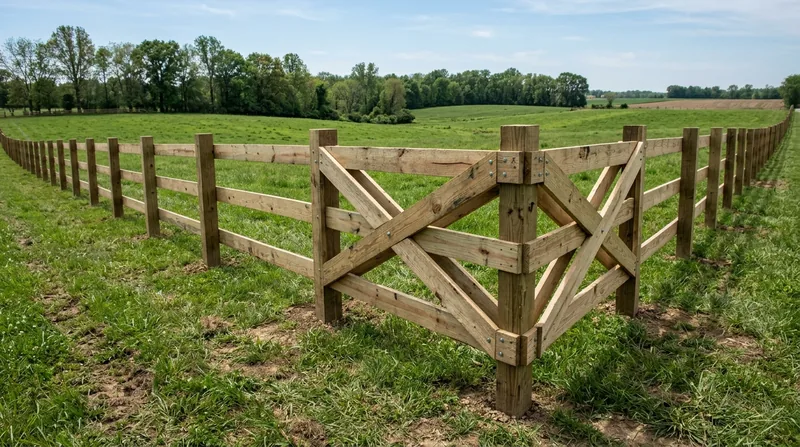




Farm fence installation in Dayton serves property owners across Greene, Miami, Darke, and Preble counties who need durable perimeter and livestock containment on acreage beyond the suburban fringe. Whether you're securing pasture for horses, cattle, or equipment storage, ranch fencing demands materials and installation methods that withstand animal pressure, weather exposure, and years of gate traffic. Dayton Fence Company has built farm and ranch installations since 2013 for landowners in Centerville, Springboro, Xenia, and the surrounding rural townships. We work from your property line and your existing survey, install to local code, and specify materials that match your livestock type and site conditions. Our crews handle the full scope: ranch rail, no-climb horse fence, field wire, pipe fencing, and gates sized for equipment and daily use.
Why Farm and Ranch Fencing Matters in Greater Dayton
Acreage outside Dayton's developed zones faces unique pressures. Pasture fencing must contain livestock reliably, withstand seasonal weather shifts, and provide safe access for equipment and emergency vehicles. A failed field fence means escaped animals, liability exposure, and urgent repair costs. A well-built ranch installation protects your investment in land and animals, defines your boundary clearly, and demonstrates stewardship to neighbors and local authorities.
- We install ranch rail fencing in 2-rail and 3-rail configurations for open pasture and horse containment.
- We build no-climb horse fence with welded wire mesh to prevent hoof and leg entanglement.
- We set pipe fencing for heavy livestock and high-traffic gates on properties in Preble and Darke county.
- We stretch field wire and barbed wire on posts set in concrete for secure perimeter control.
- We install and repair farm gates and livestock gates with hardware rated for daily equipment passage.
Each installation is sized to your property line and your livestock load, not to a template.
Key info: Before we break ground, you must call 811 for a free utility locate. This is required by Ohio law on any project involving post holes, and it protects underground electric, gas, water, and telecommunications lines on your property and neighboring land.
For detailed guidance on permits and height rules in your township, contact your local building or zoning department. Rules vary across Greene, Miami, Darke, and Preble counties, and some rural areas have fewer restrictions than suburban Dayton jurisdictions.
How We Install Ranch Fencing: Process and Scope
Farm and ranch fencing requires careful layout, solid post setting, and material selection matched to your livestock type and site exposure. We start with a walk of your property line, confirm your boundary markers, and assess soil, drainage, and gate placement. Then we set posts in concrete at spacing appropriate to your fence type, stretch and brace rails or wire, and install gates with hardware that survives equipment weight and daily use.
- We confirm your property line using your existing survey and mark post locations with you present.
- We call 811 for utility locates and wait for markings before any digging begins.
- We dig post holes at the correct spacing for your fence type (typically 6 to 8 feet for rail, closer for wire).
- We set posts in concrete below frost depth to prevent heave and settling.
- We install rails, wire, or pipe, brace for anti-sag, and tension field wire with stretcher bars and tension bands.
- We hang gates with self-closing hardware and test swing and latch function before we leave.
The entire job is sized to your acreage and livestock count, not rushed through as a standard package.
Local example: A 10-acre horse pasture in Xenia with four corners and one equipment gate typically runs 400 to 500 linear feet of no-climb fence. We set posts in concrete at 6-foot centers, install 4-foot welded mesh, and hang a 12-foot sliding gate with a self-closing latch. Total install time is 2 to 3 days depending on soil conditions and site access.
For more information on our broader fence services, including gate installation and repair in Dayton, visit our service pages.
| Fence Type | Description | Best for |
|---|---|---|
| Ranch Rail | 2-rail or 3-rail pressure-treated pine or cedar, posts set in concrete, no wire or mesh. | Open pasture, horses, aesthetic appeal, easy visibility across property. |
| No-Climb Horse Fence | Welded wire mesh (typically 2 inch by 4 inch) stretched between posts, 4 to 5 feet tall, prevents hoof entanglement. | Horse containment, safety, high-value animals, small pastures. |
| Pipe Fencing | Galvanized or powder-coated steel pipe, 2 to 4 inches diameter, posts and rails set in concrete. | Heavy livestock, high-traffic gates, equipment storage, extreme durability. |
| Field Wire and Barbed Wire | Woven or barbed wire stretched on posts, typically 4 to 5 feet, tensioned with stretcher bars and bands. | Cattle, perimeter control, large acreage, cost-effective long-distance fencing. |
Farm and Ranch Fencing Cost in Dayton: What to Expect
Ranch fencing costs vary widely based on fence type, post spacing, gate count, and site access. Ranch rail runs higher per linear foot because of material and labor; field wire costs less but requires careful tensioning and maintenance. Most acreage projects combine two or more types: rail for the front pasture, wire for the back perimeter, and a heavy-duty gate for equipment access.
A realistic starting point is $11 per linear foot for basic field wire or ranch rail on straightforward, level ground with good access. Pipe fencing, no-climb horse fence with welded mesh, and complex multi-gate installations run higher. The cost also depends on whether you're replacing an existing fence line (posts already there) or building from bare ground. Getting 2 to 3 estimates from local contractors is the best way to understand the true cost for your property. For a detailed pricing overview and to request a free on-site estimate, visit our pricing page or call (937) 930-3672.
Farm and Ranch Fencing Near Me: What Dayton and Rural County Homeowners Should Know
When you're looking for a farm fence contractor in Dayton, Springboro, Xenia, or the outlying townships, focus on three essentials: local experience with livestock and acreage, full insurance coverage, and honest guidance on repair versus replacement. Many fences can be repaired and extended; others need a full rebuild. A contractor who walks your land and proposes repair first earns your trust far more than one who immediately quotes a complete replacement.
Check that your contractor is fully insured and an AFA Member Installer (American Fence Association), which signals professional standards and liability protection. Ask for references from recent ranch or farm projects in your area. Understand whether your township requires a fence permit (many rural areas do not, but some do) and confirm setback and height rules with your local building department before design. If you have deed restrictions or live in a master-planned community, verify HOA approval for material and height before we build.
Finally, make sure your contractor understands Ohio utility locate law. Calling 811 before any digging is not optional, it is required, and it protects you and your neighbors. For a free consultation and to discuss your specific property and livestock needs, contact Dayton Fence Company today.
Farm & Ranch Fencing in Dayton: Pricing Guide
| Service | Price | Details |
|---|---|---|
| Ranch Rail Fencing | Starting at $11/ft | 2-rail or 3-rail pressure-treated or cedar, posts set in concrete, material and labor included |
| No-Climb Horse Fence | Starting at $14/ft | Welded mesh 4 to 5 feet tall, posts in concrete, stretcher bar and tension band tensioning included |
| Pipe Fencing | Starting at $16/ft | Galvanized or powder-coated steel pipe, 2 to 4 inch diameter, posts and rails set in concrete |
| Field Wire and Barbed Wire | Starting at $9/ft | Woven or barbed wire stretched on posts, tensioner and stretcher bars included, 4 to 5 feet tall |
| Farm and Livestock Gates | Starting at $400 | Single-swing or sliding gate 10 to 16 feet wide, self-closing latch hardware, posts and hinges included |
| Free Estimate | No charge | On-site walk and consultation within 24 hours, no obligation to book, call (937) 930-3672 |
Indicative pricing, the exact cost depends on square footage, finish, and site access. Free personalized estimate within 24h at (937) 930-3672.


