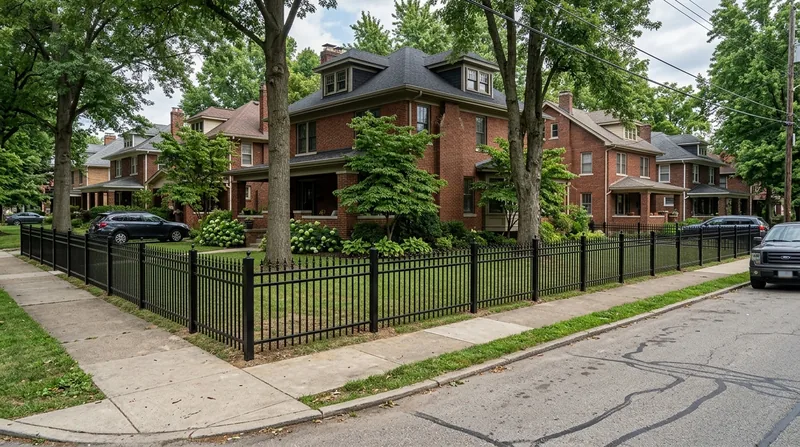




Aluminum fence installation in Dayton brings security and curb appeal without sacrificing sight lines. Whether you're protecting a front yard in Oakwood, securing a pool in Centerville, or defining an estate perimeter in Beavercreek, aluminum and ornamental iron fencing delivers rust-resistant durability and a finished look that complements period homes and modern construction alike. Unlike vinyl or wood, metal fencing handles rolling terrain without racking problems, and powder-coated finishes resist weathering for decades. We have been installing aluminum and ornamental iron since 2013, and we work as an AFA Member Installer to ensure every post is set solid and every rail is plumb. This page covers material options, cost factors, and what to expect when you call.
Why Aluminum and Ornamental Iron Fencing Works in Dayton Neighborhoods
Dayton's residential character spans from historic streetscapes where wrought iron has set the standard for a century, to newer master-planned communities where HOA architectural guidelines often favor metal over wood or chain link. Aluminum and ornamental iron handle the full range. They resist rust and moisture damage that compromise wood posts at the ground line, and they stay straight and stable across uneven terrain without the visible flex of vinyl or the sagging that affects chain link over time. When you need to close a lot without closing the view, metal fencing is the material that delivers.
- Powder-coated aluminum and steel resist rust and UV fading for 20+ years with minimal maintenance.
- Ornamental iron and wrought iron deliver the aesthetic authority that historic districts and high-value neighborhoods expect.
- Metal fencing racks over rolling ground without visible distortion, a critical advantage in Dayton's varied terrain.
- Sight lines remain open while security and privacy boundaries are clear, ideal for front yards and estate perimeters.
- Metal posts set in concrete footings stay plumb and stable through seasonal ground movement and weather cycles.
Choosing the right material and installer matters because metal fencing is a long-term investment in both appearance and function.
Local example: Many Oakwood and Riverside homeowners select powder-coated aluminum or ornamental iron for front-yard perimeters because the sight lines preserve street character while the metal finish outlasts wood by decades and requires no staining or sealing.
For more on material choices, see our guide to vinyl and PVC fencing and chain link installation to compare your full range of options.
How We Install Aluminum and Ornamental Iron Fencing in Dayton
Installation begins with a site walk and an honest conversation about what you need the fence to do. We verify property lines against your existing survey, call 811 for utility locates, and plan post spacing and racking to match your terrain. Every post is set in concrete footings below grade, and rails are secured with hardware sized for wind load and movement. Ornamental iron and wrought iron installations include anti-sag bracing on gates to prevent long-term deflection, and all fasteners are stainless steel or galvanized to prevent rust bleeding through powder coat.
- We locate your property line using your survey and mark the fence run with chalk or string.
- We call 811 for a free utility locate and wait for marking before we dig any post holes.
- We set posts in concrete footings spaced to match your terrain, racking or stepping the rails to follow grade.
- We attach rails and pickets or panels with stainless steel or galvanized fasteners, checking plumb and level throughout.
- We install gates with self-closing and self-latching hardware, and add anti-sag bracing on ornamental iron gates.
- We clean the site and haul all debris, leaving the fence ready to use and maintain.
The entire process typically takes 1 to 3 days depending on fence length and terrain complexity, and we schedule around your availability.
Real-world example: A 120-linear-foot aluminum fence with two gates around a pool in Huber Heights took two days from post holes to finished installation, including racking the fence to follow a gentle slope and installing a self-closing gate operator on the driveway gate.
If you already have a fence that needs repair rather than replacement, we often recommend fence repair or fence post repair to extend the life of your existing structure.
Installation Approaches for Aluminum and Ornamental Iron
| Approach | Description | Best For |
|---|---|---|
| Side-by-Side Aluminum Pickets | Vertical pickets fastened to horizontal rails, no gaps between pickets for full privacy or security. | Pool barriers, residential perimeters, and properties where sight line preservation is secondary to privacy. |
| Ornamental Iron with Spaced Pickets | Wrought iron or steel pickets spaced evenly on horizontal rails, maintaining open sight lines while defining the boundary. | Front yards, estate perimeters, historic districts, and neighborhoods where aesthetic presence matters as much as function. |
| Powder-Coated Aluminum Panels | Pre-fabricated aluminum sections with pickets welded to rails, powder-coated for color and UV protection. | Long runs where uniform appearance and fast installation are priorities, and terrain is relatively level or regularly racked. |
| Racked or Stepped Installation | Rails angled or stepped to follow rolling ground, keeping fence level while terrain changes elevation. | Properties with slopes or uneven grade, common across Dayton and surrounding communities where terrain varies significantly. |
Each approach is engineered for durability, and we choose the method that best matches your property, your aesthetic, and your budget.
Aluminum & Ornamental Iron Fencing Cost in Dayton: What to Expect
Metal fencing costs vary widely based on material grade, post spacing, terrain, and whether you choose aluminum or ornamental iron. A straightforward aluminum fence typically starts at $40 per linear foot installed, including posts set in concrete, rails, pickets, and basic hardware. Ornamental iron and wrought iron cost more because material is heavier, fabrication is more involved, and anti-sag bracing on gates adds labor and steel. Gates, terrain complexity, and site access all move the price up. The only way to know your true cost is to have us walk the property and measure the run.
- Powder-coated aluminum fencing starts at $40/linear foot and rises with post spacing, terrain racking, and gate complexity.
- Ornamental iron and wrought iron typically run 40 to 60 percent higher than aluminum because material weight and fabrication labor are greater.
- Gates add $300 to $800 per opening depending on width, whether the gate is manual or automatic, and anti-sag bracing requirements.
- Racking or stepping to follow uneven terrain increases labor but ensures the fence looks plumb and professional across rolling ground.
- Site access, tree removal, or soil conditions that complicate post holes can add labor and material costs, which is why an on-site estimate is essential.
Get two or three estimates from local installers so you understand the range and what each price includes. For a detailed pricing overview, visit our pricing page.
Aluminum & Ornamental Iron Fencing Near Me: What Dayton Homeowners Should Know When Hiring
Finding the right installer matters because metal fencing is precise work, and mistakes in post depth, rail alignment, or gate hardware can show immediately and cost time and money to correct. Look for an installer who is fully insured, has references you can call, and understands local permit requirements and HOA architectural standards. In some Dayton neighborhoods, fence height, setback, and material are governed by deed restriction or master-planned community rules, and a good installer will ask about those before you sign. Always verify with your local building department whether a permit is required for your specific location and fence type.
- Confirm the installer is fully insured and can provide a certificate of insurance on request.
- Ask for references from recent metal fencing jobs in neighborhoods similar to yours, and call at least two.
- Request a written estimate that itemizes material, labor, post depth, gate hardware, and any site-specific charges.
- Verify with your local Dayton building department whether your fence requires a permit and whether height or setback rules apply to your property.
- Check your HOA covenants or deed restrictions if you live in a master-planned community, because many require approval of fence material and color before work begins.
- Confirm that the installer will call 811 for utility locates before digging, as Ohio law requires it.
When you are ready to move forward, contact us for a free, no-obligation estimate. We respond within 24 hours and will walk your property to understand your site, answer your questions, and give you a realistic price.
Aluminum & Ornamental Iron Fencing in Dayton: Pricing Guide
| Service | Price | Details |
|---|---|---|
| Aluminum Fence Installation | Starting at $40/ft | Posts set in concrete, rails, pickets, and stainless steel hardware; price rises with terrain racking and gate complexity |
| Ornamental Iron and Wrought Iron | Starting at $65/ft | Heavier material, fabrication labor, and anti-sag bracing on gates; reflects material cost and precision welding work |
| Gates (Manual and Automatic) | $300 to $800 per opening | Width, hinge hardware, and whether gate includes self-closing or automatic operator; larger gates and ornamental iron cost more |
| Terrain Racking and Stepping | Included in per-foot rate | Additional labor to follow rolling ground is built into estimate; ensures fence appears level and professional across slopes |
| Travel and Site Visit | Included | No mileage fee or call-out charge in Dayton and surrounding service areas within Greater Dayton |
| Free Estimate | No Charge | Response within 24 hours at (937) 930-3672; detailed walkthrough and written quote with no obligation to book |
Indicative pricing, the exact cost depends on square footage, finish, and site access. Free personalized estimate within 24h at (937) 930-3672.


